
Latest
How to Choose the Right Frequency Therapy Disc for Your Animal: A Step-by-Step Guide


Frequency-based therapies are increasingly used in animal care to support recovery, comfort, and functional balance. As awareness grows, many owners and veterinary professionals ask the same question: how do you choose the right therapy disc for a specific animal or condition?
Choosing therapy discs for animals requires an understanding of the animal’s needs, the underlying physiological challenges, and how frequency-based support integrates with conventional veterinary care. This guide explains the process step by step, focusing on practical decision-making while staying within responsible and regulatory-safe use.
Understanding Frequency Therapy in Animals
Frequency therapy is based on the principle that healthy tissues maintain specific neurological signaling patterns. Injury, stress, inflammation, or chronic dysfunction can disrupt these patterns. Frequency therapy discs are designed to support the body’s natural regulatory processes within the nervous system and cellular communication pathways.
ANF Animal Therapy® uses non-invasive discs that are applied externally to animal skin. These discs do not deliver drugs, electricity, or mechanical force. They are used as supportive tools alongside veterinary diagnosis and treatment.
Why Disc Selection Matters

Not all therapy discs serve the same purpose. Each disc is designed to support specific physiological pathways, such as inflammation regulation, neuromuscular coordination, tissue recovery, or stress modulation. Using a disc that does not align with the animal’s primary challenge may reduce effectiveness or delay observable improvement.
Choosing therapy disc animals correctly improves outcomes, supports comfort, and allows more precise integration into an existing care plan.
Step 1: Identify the Primary Concern
The first step is defining the main issue affecting the animal. Many animals present with multiple symptoms, but disc selection should focus on the dominant functional limitation.
Common categories include pain or discomfort, mobility restriction, muscle tension or weakness, post-injury recovery, performance-related strain, stress or behavioral tension, skin or coat concerns, and post-surgical recovery support.
Take your pets to veterinarians for a detailed assessment. You should always rely on veterinary guidance or certified ANF practitioners rather than making a self-diagnosis.
Step 2: Determine Whether the Issue Is Acute or Chronic
Acute issues often involve recent injury, inflammation, or post-procedural recovery. Chronic issues develop over time and involve compensatory movement patterns, persistent inflammation, or neurological adaptation.
This distinction matters because disc selection differs between short-term support and long-term regulation. Acute support focuses on calming inflammatory and stress responses. Chronic support emphasizes neuromuscular balance, adaptive signaling, and tissue resilience.
Step 3: Evaluate Nervous System Involvement
The nervous system plays a central role in pain perception, muscle tone, coordination, immune responses, and healing capacity. Animals with recurring symptoms often show signs of nervous system dysregulation, such as hypersensitivity, guarding, altered gait, or behavioral changes.
ANF Animal Therapy® discs are commonly selected based on neurological involvement rather than symptom location alone. A limp, for example, may reflect neuromuscular imbalance rather than isolated joint pathology.
Step 4: Match the Disc to the Functional Goal
Disc selection should align with the intended outcome rather than a disease label. Common functional goals include reducing discomfort, supporting mobility, improving coordination, supporting tissue recovery, modulating stress responses, or supporting skin and coat balance. Certified ANF practitioners select discs to support these goals.
Step 5: Consider Species, Size, and Activity Level

Disc selection and placement depend on species-specific anatomy and activity demands. Performance horses, working dogs, companion animals, and aging pets all place different demands on their neuromuscular systems.
Athletic animals may require discs that support recovery and coordination, while senior animals may benefit from discs supporting comfort and adaptive movement. Size and coat density also influence placement strategy, but not disc function.
Step 6: Integrate With Veterinary Care
Frequency therapy is not a replacement for veterinary medicine. It functions best as a complementary approach. Veterinarians should ensure that structural injury, infection, metabolic disease, or surgical needs are appropriately addressed.
Choosing therapy discs for animals responsibly is essential for supporting recovery, comfort, and functional balance while medical conditions are treated through established clinical care.
Step 7: Proper Placement and Application
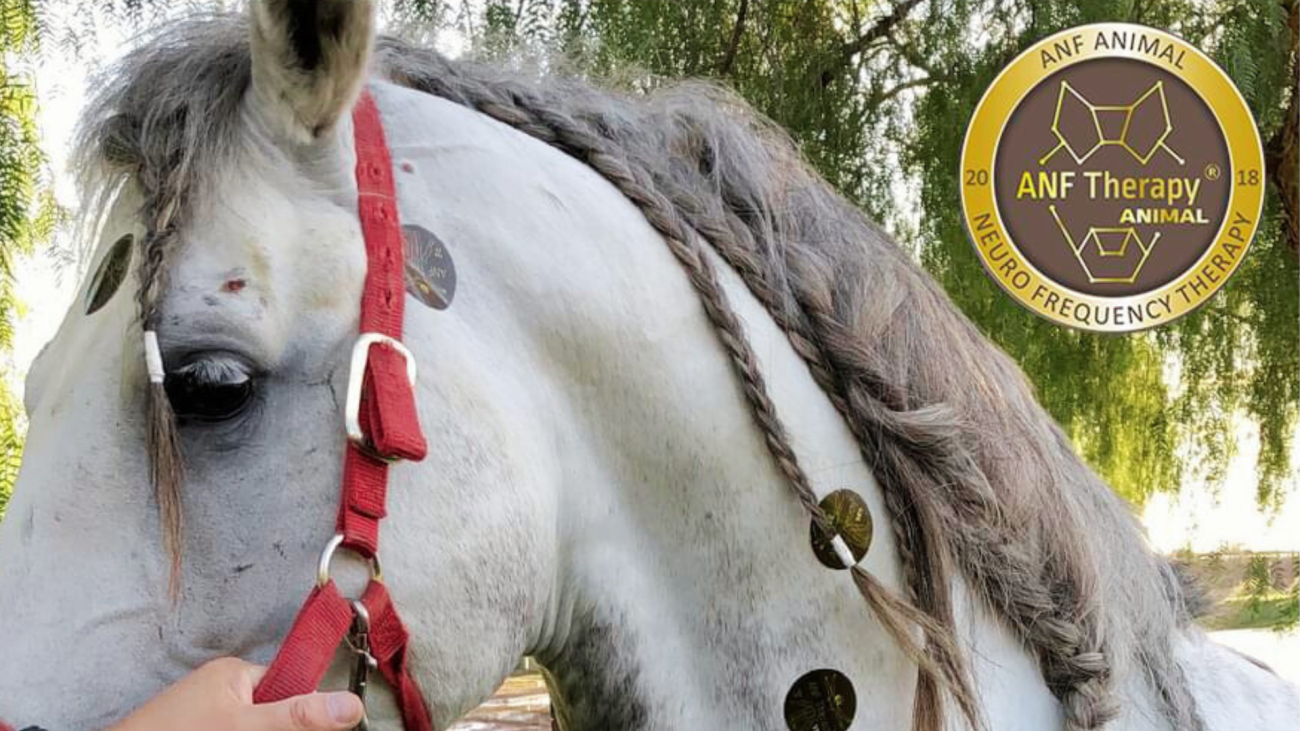
Correct placement is essential for effectiveness. ANF Animal Therapy® discs are placed externally on specific anatomical or neurological reference points by trained ANF Therapists after a detailed assessment, and the animal’s response to the therapy.
You should not guess placement without instruction. Certified practitioners provide guidance to ensure safety and consistency.
Step 8: Observe the Animal’s Response
Animals respond individually to frequency therapy. Some show rapid changes in relaxation, posture, or movement. Others respond gradually over multiple sessions.
Your pet may show short-term responses, such as increased relaxation, mild fatigue, or behavioral calmness. These responses reflect nervous system adaptation rather than adverse effects. Discuss any concerning reactions with the practitioner or veterinarian.
Step 9: Adjusting Therapy as Your Pet Improves
As your pet’s condition changes, the type of therapy disc used may also change. In the early stages, the focus is often on calming the nervous system and improving comfort. As your pet starts to feel better, discs may then be selected to support better movement, strength, or overall activity. Regular reassessment helps ensure that the therapy continues to match your pet’s current needs. This step-by-step approach supports long-term improvement and helps avoid unnecessary or inappropriate use.
Common Ways ANF Animal Therapy® Discs Are Used

If your pet has mobility issues, ANF discs may help support muscle coordination and joint comfort. During recovery after an injury or surgery, discs can help support the body’s internal healing environment to reduce stress on the system. For active or performance animals, discs are often used to support recovery between training or activity sessions. In pets with skin or coat concerns, disc selection may focus on supporting stress balance and immune signaling. In older pets, discs are commonly used to support comfortable movement and help the body adapt to age-related changes.
What Pet Owners and Veterinarians Commonly Observe
Veterinarians often find that frequency therapy fits well into rehabilitation and wellness programs. Many report that animals tolerate physical therapy better and return to normal movement more smoothly when discs are used as part of a complete care plan.
Pet owners frequently notice that their animals appear more comfortable, calmer, and more willing to move. Many also report improved posture, smoother movement, and greater engagement in daily activities. These changes reflect supportive benefits rather than medical treatment claims.
Safety and Responsible Use
Conclusion
Choosing therapy discs for animals starts with understanding your pet’s needs and working with trained professionals. Frequency therapy works best when it supports your pet’s nervous system and overall function, rather than focusing only on symptoms.
ANF Animal Therapy® provides a structured, gentle, and non-invasive approach to supporting comfort, recovery, and balanced movement. When used responsibly alongside veterinary care, frequency therapy discs can become a valuable part of your pet’s long-term wellness and quality of life.